What are the main sources of Nitrate in Groundwater?
Nitrate is one of the most common contaminants found in groundwater, especially in California’s Central Valley. While small amounts of nitrate occur naturally, high levels of nitrate in groundwater are often caused by human activities. Key activities include septic tanks & sewer systems, farm animal waste, fertilizers & pesticides, industry, and stormwater runoff.
Because nitrate moves easily through soil and can persist in groundwater for decades, it’s important to understand where it comes from and how it reaches drinking water.
Let’s walk through the most common human activities that lead to increased levels of nitrate, how it travels through the environment, and what you can do to protect your household water supply if you rely on a private domestic well for the water in your home.
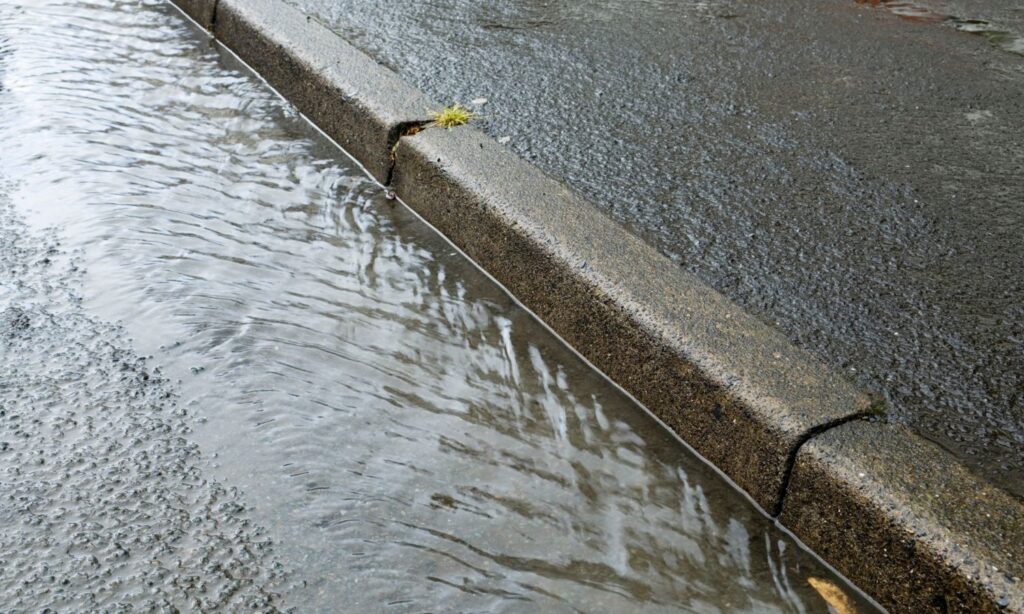
STORMWATER RUNOFF
When rain falls in cities, it runs across hard surfaces and carries pollutants, like nitrate into local waterways.
FARM ANIMAL WASTE
Animal manure is source of nitrate that can be found on animal farms (dairy, poultry, livestock, etc.)
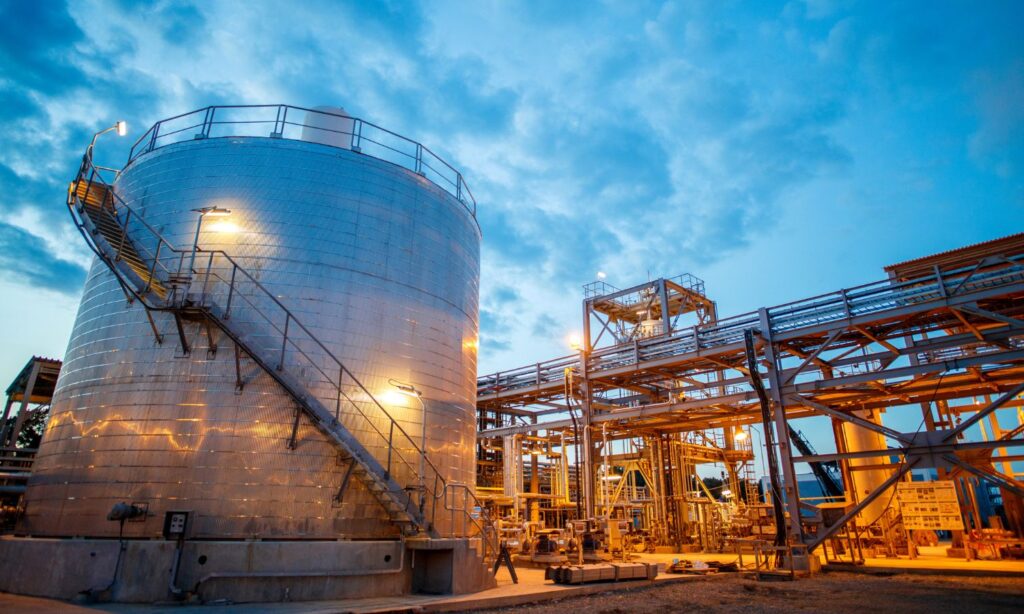
INDUSTRY
Industries like food processing plants can produce nitrate as a waste product of production.
SEPTIC TANKS & SEWERS
Leaky septic tanks & public sewers can release nitrate into waterways that gets to groundwater.
FERTILIZERS & PESTICIDES
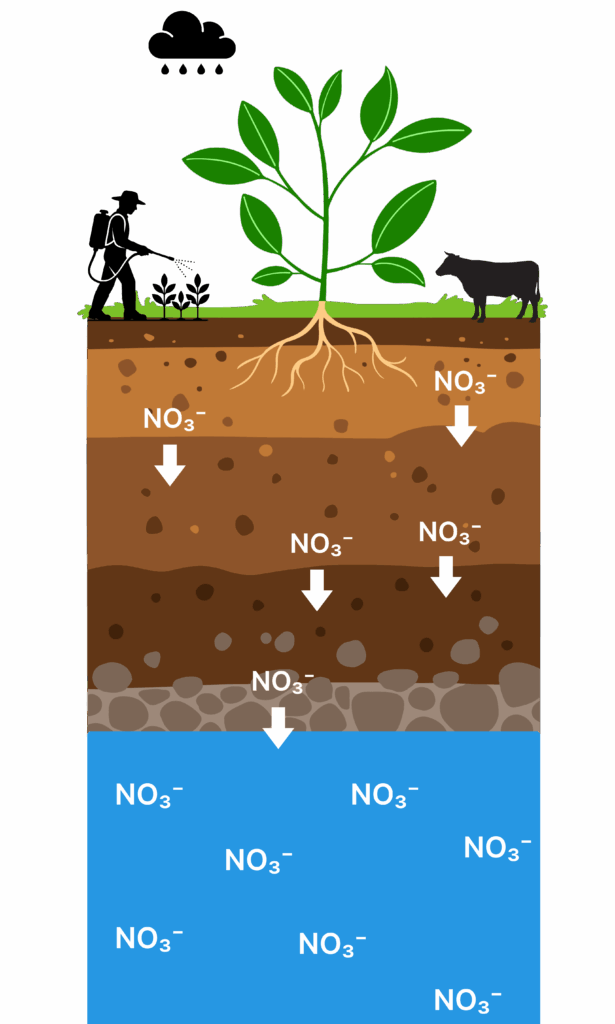
Fertilizers and pesticides used on crops contain nitrates. When it rains, nitrate seeps into groundwater.
Why it Matters: Your Health
High levels of nitrate in drinking water can lead to various negative heath issues because nitrate interferes with our red blood cells’ ability to transport oxygen. This is especially harmful for pregnant women and infants as too much nitrate during pregnancy can lead to a condition called “blue-baby syndrome”.
How Nitrate Moves Through Soil & Water
Nitrate moves easily through the environment because it dissolves well in water. Once nitrogen from fertilizers, manure, septic systems, or other sources is converted into nitrate, it can seep down through the soil from rain or irrigation water. Unlike some other contaminants, nitrate doesn’t “stick” well to soil particles — which means it can migrate quickly past plant roots and continue downward toward groundwater.
As water percolates through layers of soil and sediment, nitrate travels with it until it reaches the aquifer below. In areas with sandy or coarse soils, this movement can happen even faster because those soils don’t hold water for long. In wetter years, heavy rainfall or snowmelt can accelerate nitrate leaching, pushing more of it into groundwater than in dry years.
Nitrate is highly soluble and stable in oxygenated water, so once it enters groundwater it can remain and accumulate for decades.
Protecting Your Drinking Water
Here are some helpful tips to reduce nitrate from entering groundwater on your property:
Understanding where nitrate comes from and how it moves through soil and groundwater is important because nitrate is colorless, odorless, and tasteless, so the only way to know your well water is safe is through reliable testing.
The Kings Water Alliance offers free residential well testing for eligible households and free bottled drinking water if nitrate levels exceed the safe drinking water standard. Take the next step to protect your family’s health — schedule your well water test today.